Period: November 2025 ~ March 2026
-
Online Sessions and Introduction to EBA course: November ~ December, 2025
-
At the Field: February 23rd – March 1st
-
Final Presentation (Online): 18:15 ~ 19:15 (UTC+9), March 31st
Please Click HERE to access the final presentation video on YouTube
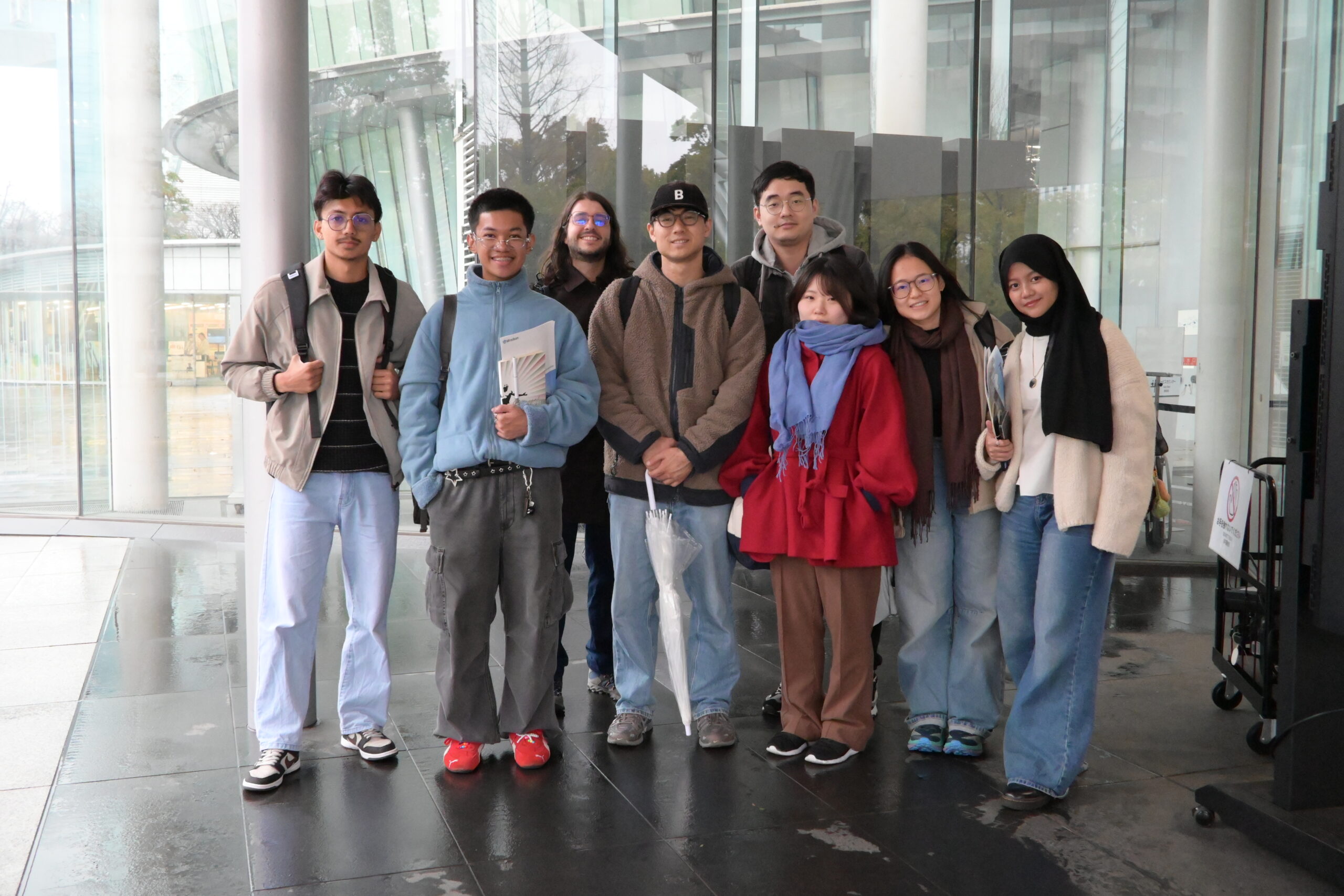
Participants: 10 (6 students, 4 Host University members)
Indonesia
Institut Teknologi Bandung (ITB)
-
-
Fadila Larasati Khansa (Visual Communication Design)
-
Japan
Keio University (KEIO)
-
-
Anna Goto (Graduate School of Media Design)
-
Malaysia
University of Malaya (UM)
-
-
Wenjunliang Zhang (Electrical Engineering)
-
Universiti Sains Malaysia (USM)
-
-
Gao Jie Tan (Applied Sciences)
-
Philippines
University of the Philippines Diliman (UPD)
-
-
Asrael Ian Alba Francisco (Science in Chemistry)
-
Nepal
Tribhuvan University (TU)
-
-
Prabhat Chaulagain (Computer Engineering – Eletronics)
-
Fieldwork Host
Keio University (KEIO)
-
Fieldmaster and Organizer: Leandro Navarro Hundzinski (Keio University Global Research Institute)
-
Fieldmaster: Fathima Assilmia (Keio University Global Research Institute)
-
Kiyoko Itagaki (Keio University Global Research Institute)
-
Teaching Assistant: Shumpei Tasaki (Student at the Faculty of Policy Studies)
Summary:
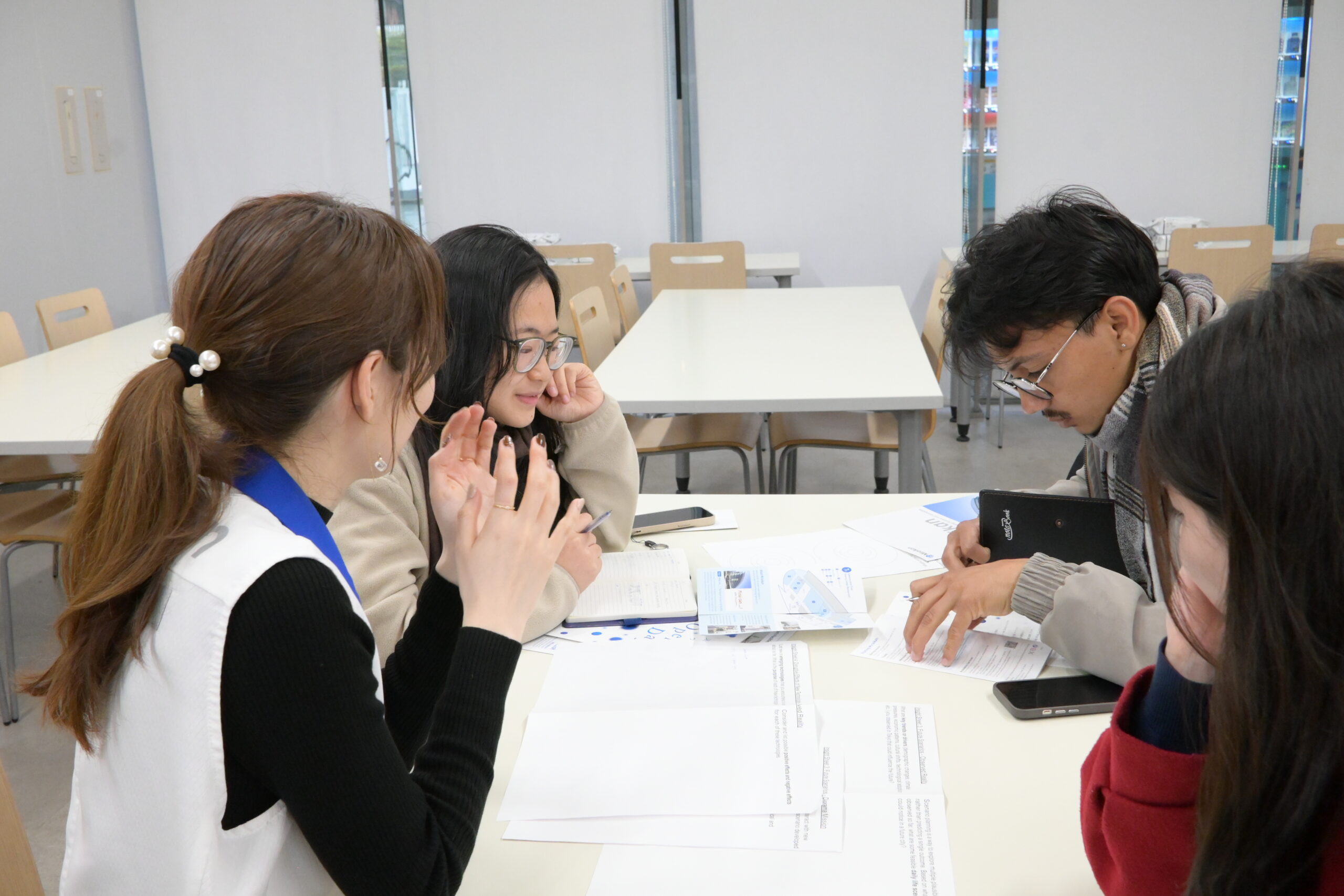
In this program, participants learned and utilized the EBA method, practicing Data Collection, Data Analyzation, Data Visualization, and Storytelling. They observed and learned about the effects of the quick technological transformation, utilizing a human-centered design perspective to understand the possible disruptive impacts of integrating new technologies in society.
Participants learned about the field while investigating the following questions:
- How can we understand future society through the impacts of disruptive technologies, and how might these innovations redefine human relationships, cities, and resilience?
- How can Human-Centered Design guide the responsible application of disruptive technologies toward socially, economically, and environmentally resilient futures?
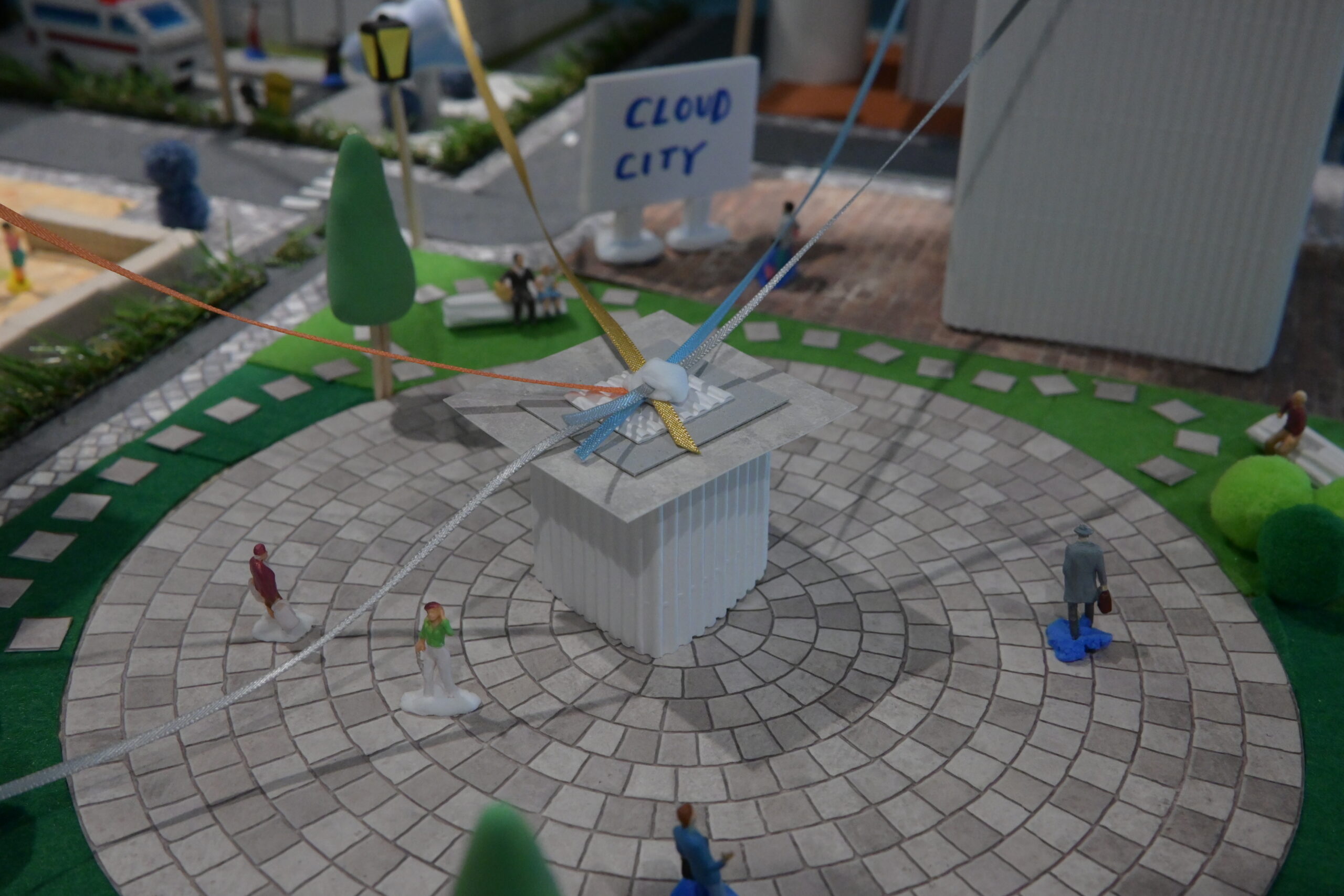
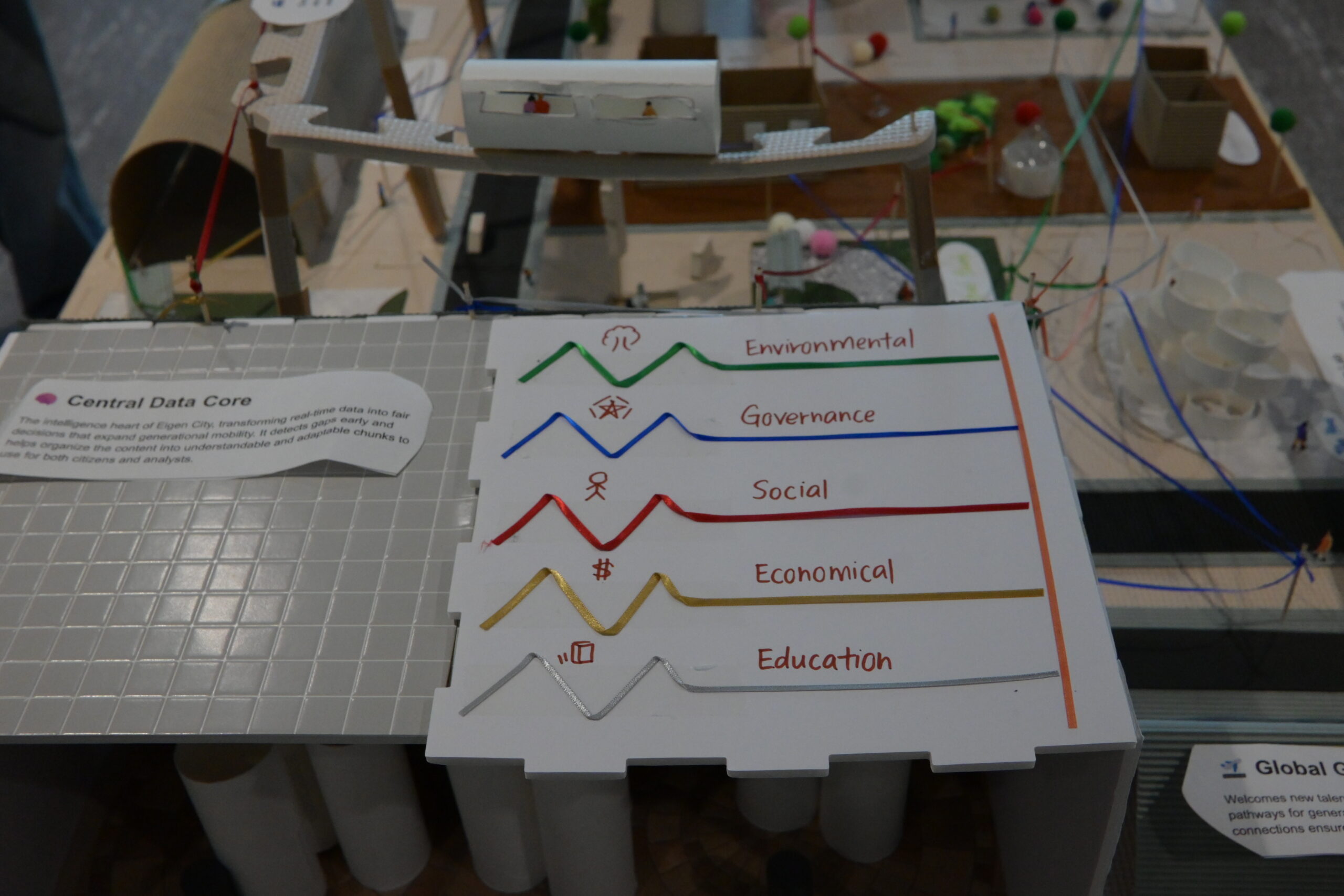
During the fieldwork, students engaged in discussions with different stakeholders to build a deeper understanding about technological integration. Then, each group showcased a diorama of their future city, highlighting possible implementations of technology in future daily life and strategies for resilient city design based on data flows and on tending to different human needs from the people living in the city.